
Clive Barker's Hellraiser Revival enemies: Combat Guide
Explore Clive Barker's Hellraiser Revival enemies, from cultists to infernal priests. Learn how weapons, puzzle box powers, and positioning shape combat.
Jump to
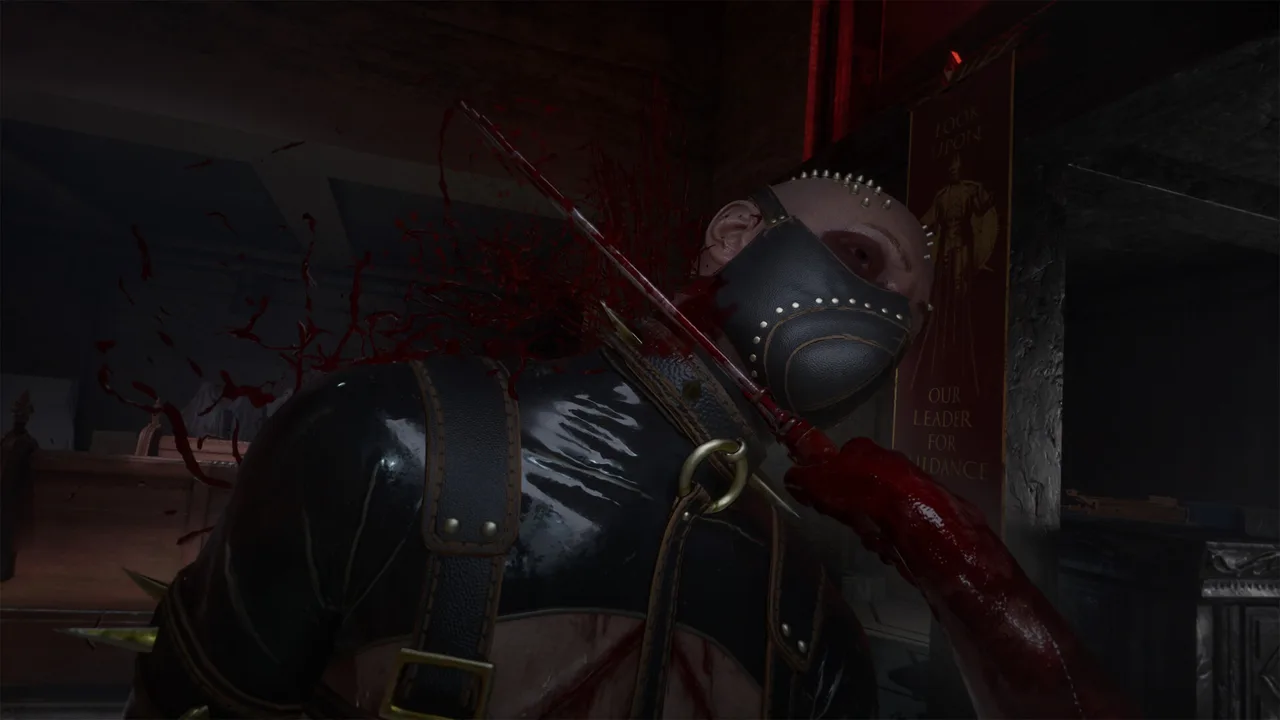
Know What You’re Facing Before You Commit
A doorway can become an ambush—or an opportunity—when you understand where a threat will appear. Learning about Clive Barker's Hellraiser Revival enemies matters because Aidan’s fight to rescue Sunny combines earthly weapons, supernatural powers, and encounters with a cult devoted to the Cenobites. This guide to Clive Barker's Hellraiser Revival enemies explains the named enemy groups, Pinhead’s role, and practical ways to approach combat without assuming weaknesses the game’s descriptions haven’t established.
The setup puts Aidan in a dangerous bargain. Sunny is trapped in the Labyrinth, and the Genesis Configuration gives him powers connected to the nightmare he must navigate. His opposition includes wretches, deviants, cultists, and infernal priests.
Those names establish the range of threats, but they don’t provide a complete combat manual. A cultist’s affiliation tells you something about the story; it doesn’t automatically tell you their weapon, attack range, or vulnerability.
A good approach is to separate what an enemy is called from what you can actually observe during an encounter. Watch its behavior, consider the space around it, and choose a response using the tools currently available to you.
That distinction also helps with familiar Hellraiser terminology. Recognizing a name from the franchise doesn’t establish a particular boss fight or attack pattern in Revival. Treat the game’s own encounters as your guide.
Official source: Clive Barker's Hellraiser Revival (hellraisergame.com)
Clive Barker's Hellraiser Revival Enemies: Named Groups
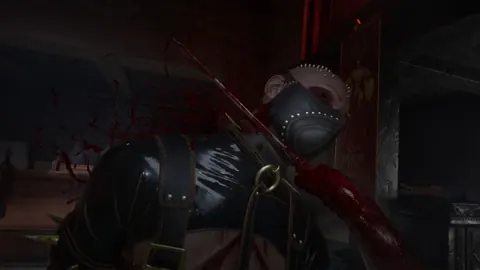
The game’s descriptions identify several kinds of opposition, with the Cenobite cult providing a clear connection between combat and the story. These are broad labels rather than a documented bestiary with individual health values or damage resistances.
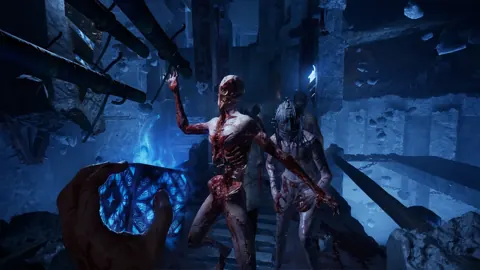
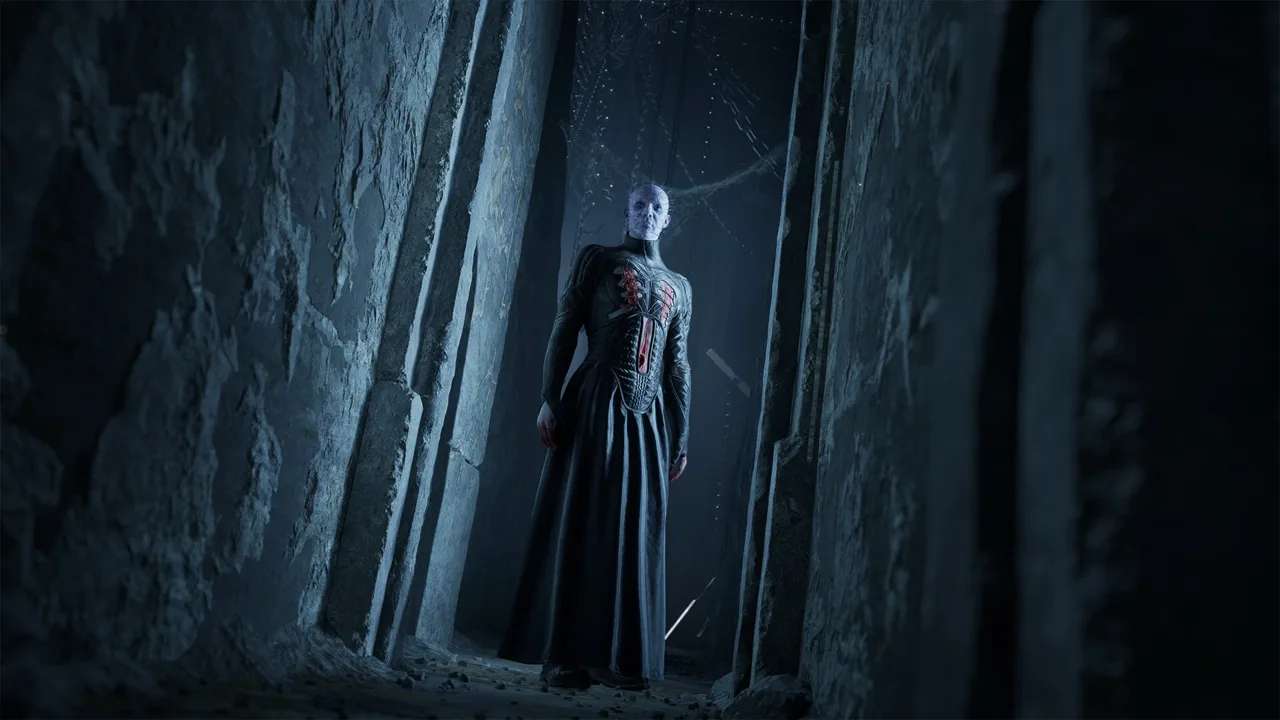 Image: Steam / Saber Interactive
| Enemy group | Established information | Combat details still unspecified |
|---|---|---|
| Wretches | Named among the enemies Aidan faces | Individual variants, attacks, and weaknesses |
| Deviants | Included in the game’s hostile lineup | Their distinction from other enemy groups |
| Cultists | Aidan battles a cult devoted to the Cenobites | Weapons, formations, and specific combat behavior |
| Infernal priests | Explicitly included among the opposition | Named identities, encounter structure, and vulnerabilities |
Cultists and Their Cenobite Connection
Cultists are directly tied to Aidan’s struggle. The story places him against a horrific cult devoted to the Cenobites while he attempts to survive his bargain with Pinhead.
That connection gives these enemies narrative significance, but it doesn’t establish a universal fighting style. Avoid assuming that every cultist uses melee attacks, carries a firearm, or behaves identically.
A useful tip is to respond to the enemy’s visible actions rather than its affiliation. If an encounter gives you time to observe, use that opportunity to understand the immediate threat before choosing a weapon or box ability.
Wretches, Deviants, and Priests
Wretches and deviants broaden the enemy lineup beyond the cult. However, their names alone don’t justify assigning them roles such as fast attacker, armored brute, or ranged specialist.
Infernal priests also appear in the announced opposition. Their title fits the game’s religious horror, but it doesn’t establish that every priest is a boss or that priests share a particular defense.
For players learning Clive Barker's Hellraiser Revival enemies, the practical takeaway is simple: these labels help identify the setting’s threats, while actual encounter behavior should guide your decisions.
Consider keeping brief notes about enemies you encounter. Record the location, what the opponent actually did, and which response you tried. Separating observations from guesses makes those notes more useful when a similar encounter appears.
Pinhead, the Cenobites, and Aidan’s Bargain
Pinhead is central to Hellraiser: Revival. Aidan must survive a bargain with him, and the story involves unwittingly setting Pinhead’s ritual in motion.
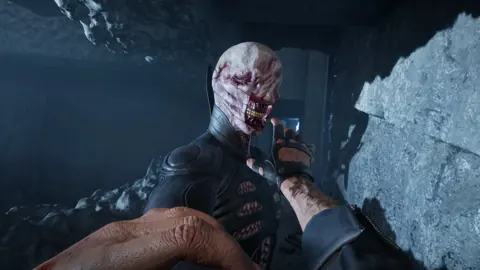
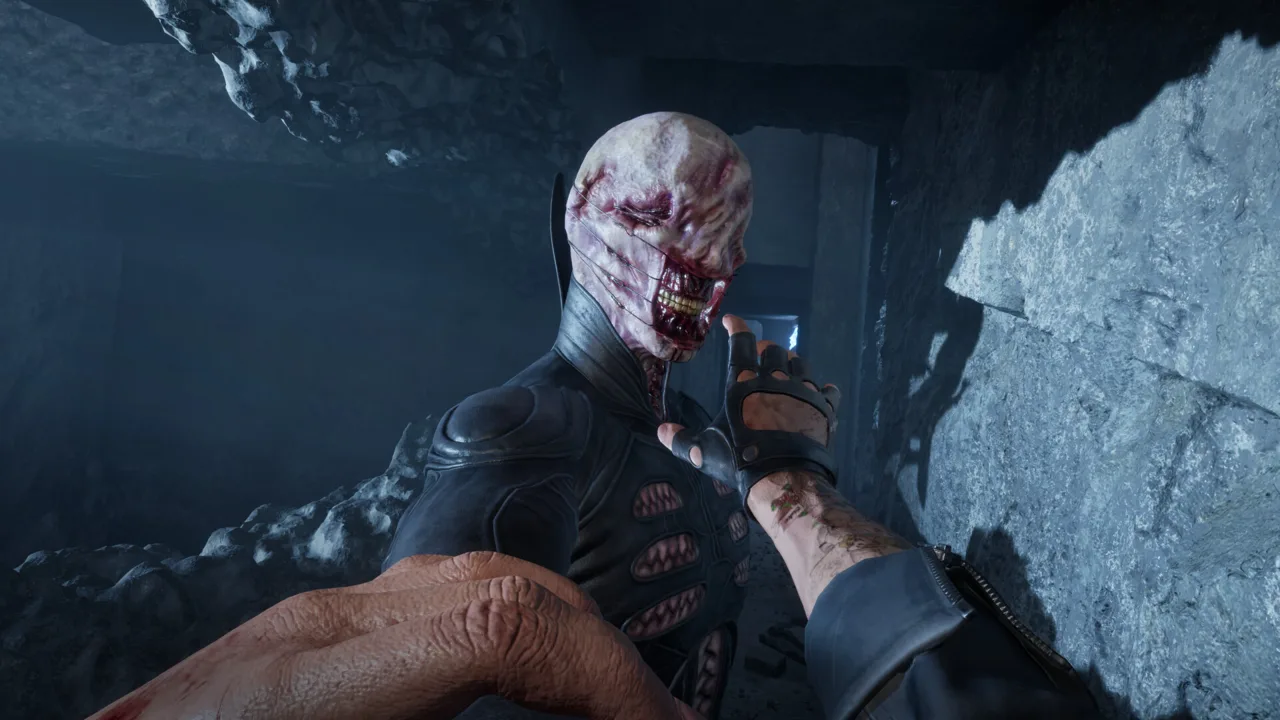 Image: Steam / Saber Interactive
That establishes his importance without establishing a specific boss encounter. There isn’t enough detail here to give a reliable Pinhead strategy involving attack phases, weak points, or a required finishing move.
The Cenobites matter through the cult’s devotion and the broader horror surrounding Aidan. Still, franchise familiarity shouldn’t substitute for a named enemy roster.
| Character or group | Role established in the story | What that means for this guide |
|---|---|---|
| Aidan | Protagonist trying to help Sunny escape | His weapons and box powers frame the combat |
| Sunny | Aidan’s girlfriend, trapped in the Labyrinth | Her rescue supplies the central objective |
| Pinhead | Central to Aidan’s bargain and the ritual | His story role does not establish boss mechanics |
| Cenobites | Objects of the hostile cult’s devotion | Individual combat appearances are not fully detailed |
Don’t Turn Story Details Into Combat Rules
A bargain with Pinhead is a major story element. It isn’t evidence that you can defeat him with a particular weapon or interrupt his ritual through a specific combat action.
Likewise, the presence of Cenobite worshippers doesn’t establish that every familiar Cenobite appears as an opponent.
This matters when looking for help with Clive Barker's Hellraiser Revival enemies. A useful guide should distinguish narrative threats from documented combat encounters instead of presenting speculation as a walkthrough.
The same restraint applies to the game’s description of enemies as masochistic. That language supports Hellraiser’s themes of pain and pleasure. It does not establish that damage heals enemies, increases their strength, or requires a special execution mechanic.
When an opponent reacts unexpectedly, observe the actual result. Avoid building a strategy around a thematic phrase unless the encounter demonstrates a corresponding mechanic.
Combine Earthly Weapons With the Genesis Configuration
Aidan’s combat tools come from two established sources: earthly weapons and the supernatural abilities of the Genesis Configuration. The game explicitly presents those tools as something you can combine.
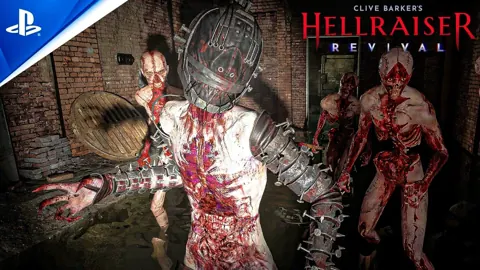
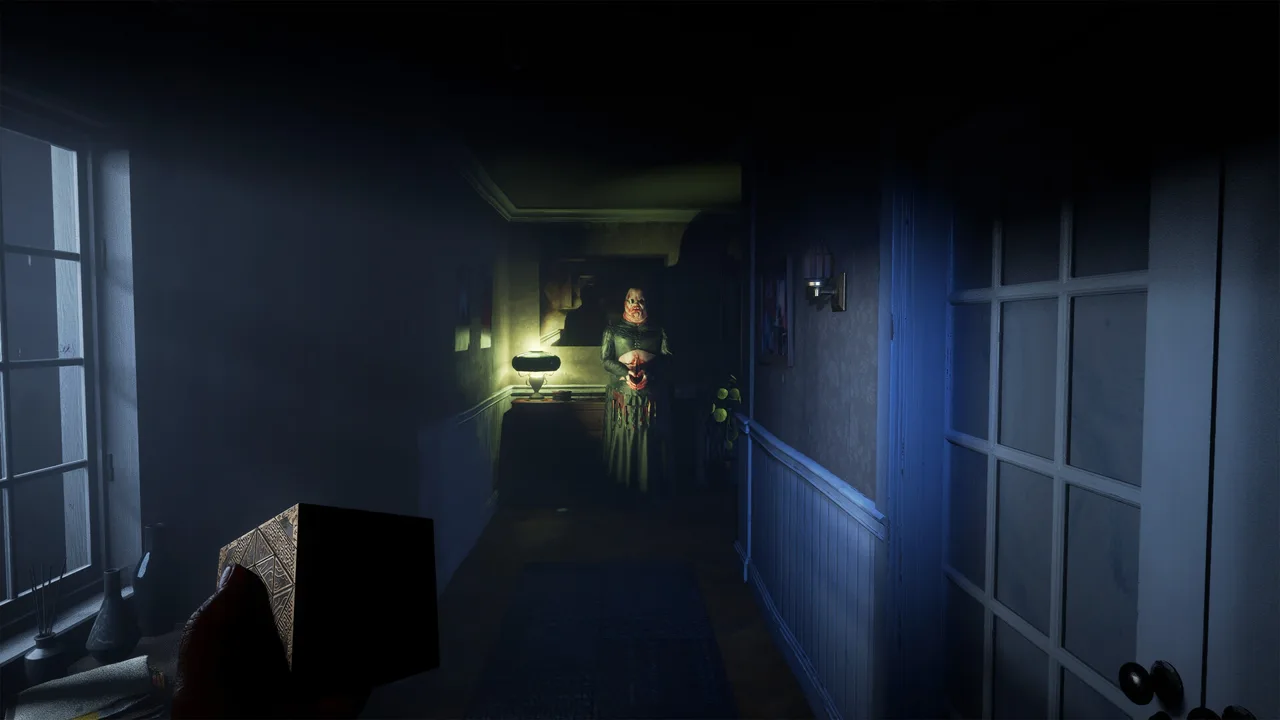 Image: Steam / Saber Interactive
That gives you a useful starting point for approaching Clive Barker's Hellraiser Revival enemies. Consider how the options complement each other instead of assuming every encounter should be handled with the same weapon.
The exact box abilities, their costs, and their limitations aren’t detailed here. There is also no supported damage chart that ranks the available weapons against particular enemy groups.
| Combat tool | Established detail | Practical consideration |
|---|---|---|
| Genesis Configuration | Grants supernatural abilities used alongside weapons | Consider the ability’s displayed function before combining it with an attack |
| Earthly weapons | Form part of Aidan’s combat arsenal | Choose according to the situation you can observe |
| “The Nailer” | Listed as a Digital Deluxe Edition melee weapon | Its listing does not establish superior damage |
| Shotgun and baseball bat skins | Cosmetic items listed in the Deluxe Edition | Skin names do not establish combat bonuses |
| “Leviathan” weapon charm | Listed as a Deluxe Edition item | The name does not identify an enemy encounter |
Choose Tools by Function
A good approach is to read the information attached to a weapon or ability and then test a clear purpose during combat. You’ll learn more from a deliberate choice than from changing several things at once.
For example, when trying a box ability alongside a weapon, focus on what the ability visibly changes. Does the combination produce the result you expected? If it doesn’t, reconsider the choice rather than assuming the enemy has an undocumented resistance.
This is editorial advice for learning the combat system, not a claim about a particular combo.
The Deluxe Edition names also deserve careful reading. A “Cenobite” shotgun skin is a cosmetic listing, not evidence of a shotgun designed specifically to defeat Cenobites. A “Leviathan” charm similarly doesn’t establish that Leviathan is a fightable enemy.
For enemy preparation, demonstrated weapon behavior is more useful than a dramatic item name. Keep the distinction between equipment, cosmetics, and opponents clear.
Use the Doorway Setup as a Tactical Lesson
One demo encounter offers a concrete example of preparation: a player anticipates an enemy emerging from a doorway and positions a movable object nearby with the intention of creating an explosion.
The player specifically leaves room for the door to swing open. Their reaction suggests the setup works in that encounter, although the commentary doesn’t identify the object precisely or establish the damage dealt.
The useful lesson for Clive Barker's Hellraiser Revival enemies is that positioning may create opportunities before direct combat begins. The example supports experimenting with an available environmental object in that situation; it doesn’t establish that every object can explode or every doorway can host the same trap.
| Detail from the demo encounter | Tactical lesson | Limit of the example |
|---|---|---|
| An enemy is expected at a doorway | A known arrival point can inform preparation | Enemy arrivals are not universally predictable |
| An object is moved into position | Available environmental interactions may help shape an encounter | Not every object is necessarily movable |
| Space is left for the door to open | Account for moving geometry during placement | No required placement distance is established |
| The player plans an explosion | An environmental setup may offer an attack opportunity | Exact damage and enemy vulnerability are unspecified |
Adapt the Idea to the Encounter
If you encounter a comparable movable object, a reasonable approach is to check its available interaction and consider where the enemy is likely to pass. Keep the doorway’s movement in mind rather than placing something where it interferes with your intended setup.
Don’t assume the object is explosive simply because the demo’s player planned an explosion. Its identity and properties remain unspecified in the commentary.
The example also doesn’t establish a universal sequence of inputs. Use the controls and interaction prompts shown in your version of the game instead of borrowing an invented key binding.
For encounters more broadly, build your decisions around a few grounded questions:
- What is the immediate threat? Use visible behavior to guide your response.
- Which tools are available? Consider both weapons and the Genesis Configuration.
- Does the environment offer an interaction? Investigate objects the game lets you use.
- What did your attempt actually accomplish? Distinguish the observed result from your expectation.
This approach keeps experimentation purposeful. The goal is to learn something useful about the encounter, whether that means understanding an opponent’s behavior or finding a workable way to combine your tools.
With Clive Barker's Hellraiser Revival enemies, careful observation gives you a stronger foundation than assuming every frightening creature shares the same weakness. Start with the named threats, then let their behavior and your available equipment shape the fight.
FAQ
What are the confirmed Clive Barker's Hellraiser Revival enemies?
The game names wretches, deviants, cultists, and infernal priests among its enemies. It also establishes that Aidan fights a cult devoted to the Cenobites. These descriptions provide broad enemy groups rather than a complete list of individual opponents and weaknesses.
Is Pinhead a confirmed boss fight?
Pinhead is central to Aidan’s bargain and the story’s ritual. Those details do not establish a specific boss fight, attack pattern, or method for defeating him.
How does the Genesis Configuration help in combat?
The Genesis Configuration gives Aidan supernatural abilities that can be combined with earthly weapons. Specific powers, resource costs, and enemy interactions are not detailed here, so choose combinations based on the information and behavior shown in the game.
Can you use explosive traps against enemies?
A demo encounter features a player positioning a movable object near a doorway while planning an explosion against an approaching enemy. It offers a situational example of environmental preparation, but it doesn’t establish universal trap mechanics, guaranteed kills, or identical behavior in the release version.
Continue with
 Clive Barker's Hellraiser Revival genesis configuration: FAQClive Barker's Hellraiser Revival genesis configuration guide: learn how Aidan's puzzle box connects Sunny, Pinhead, and combat in the Labyrinth. See more.
More in Guide
Clive Barker's Hellraiser Revival achievements: Guide
Track Clive Barker's Hellraiser Revival achievements with a practical guide to combat challenges, crafting, collectibles, and both endings. Plan your run.
Clive Barker's Hellraiser Revival boss fights: Mercy Guide
Clive Barker's Hellraiser Revival boss fights: Beat the Sister of Mercy with fire, revolver headshots, and Genesis Configuration powers. Conserve ammo.
Clive Barker's Hellraiser Revival characters: Cast Guide
Meet Clive Barker's Hellraiser Revival characters, from Aidan and Sunny to Pinhead. Explore their roles, voice actors, and enemies seeking the puzzle box.
Clive Barker's Hellraiser Revival codes: Keypad Guide
Clive Barker's Hellraiser Revival codes unlock safes, lockers, and cupboards. Find nine combinations, loot details, and tips for the Codebreaker trophy.
Join the community
Official channels for news, updates and player help: